AI News July 2026: The Biggest Updates

Introduction
If you blinked this month, you probably missed something big. AI news in July 2026 has come at a pace that even people who cover this stuff every day are struggling to keep up with.
We saw a major new model launch get held up by the U.S. government. We saw a chipmaker post the best quarter in its 39-year history. And we saw two of the biggest names in AI — OpenAI and Anthropic — get pulled into policy fights that used to only happen in Washington think tanks.
This article breaks down what actually happened, why it matters, and what it might mean for you, whether you’re a business owner, a developer, or just someone who uses ChatGPT to write emails. No hype, no guessing games — just what’s been confirmed and what’s still up in the air.
Table Of Contents
- GPT-5.6 Finally Launches — After a Government Review
- Anthropic’s Fable 5 and Mythos Models Hit an Export Control Wall
- Google’s Gemini 3.5 Pro Keeps Getting Delayed
- Grok 4.5 Enters the Race
- The Chip Boom Isn’t Slowing Down: TSMC’s Record Quarter
- Feature Comparison: The Big Four Models
- Pros and Cons of the Current AI Landscape
- Real-World Use Cases
- Pricing Snapshot
- Who Should Pay Attention to This News?
- My Honest Verdict
- 7 FAQs
- Conclusion
GPT-5.6 Finally Launches — After a Government Review {#gpt-56}
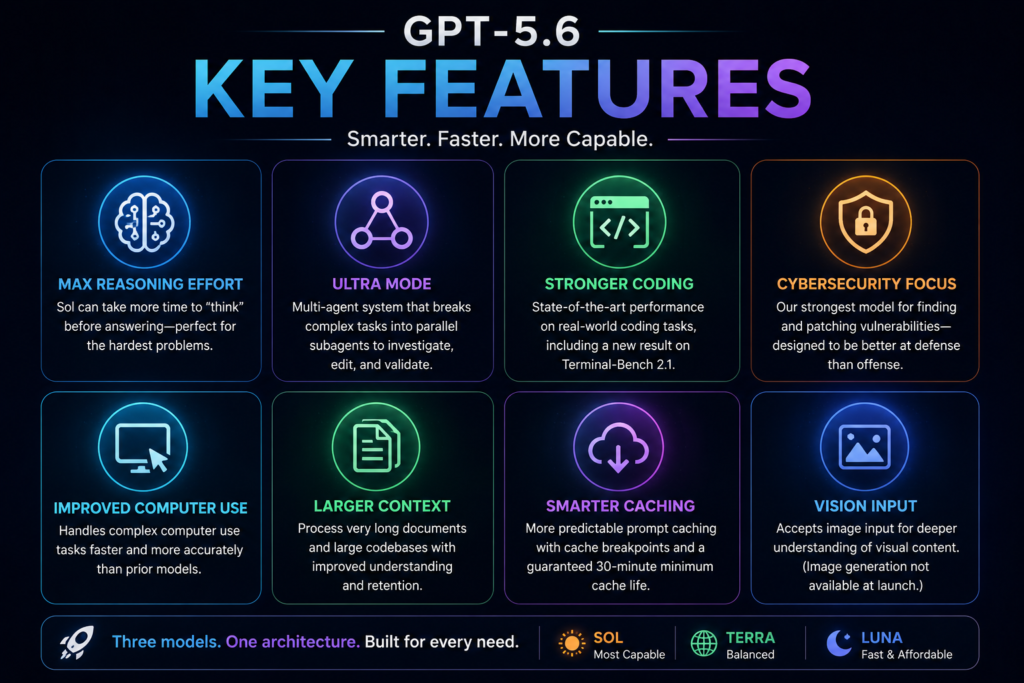
OpenAI GPT-5.6 Launch: Everything You Need to Know
Let’s start with the story that dominated headlines: OpenAI’s GPT-5.6.
The company gave a small group of trusted partners early access to the model on June 26, 2026. That’s not unusual on its own. What was unusual is why the wider public launch got held up.
OpenAI said it was working with U.S. government reviewers to check the safety of these models before letting everyone use them. This came out of a broader push, tied to a cybersecurity executive order, asking major AI labs to let the government take a look at their most powerful systems before they go public.
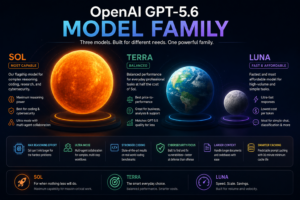
GPT-5.6 officially launched for everyone on July 9, 2026, faster than the full 30-day review window many expected. The family comes in three flavors:
- Sol – the flagship, most powerful version, tuned heavily for coding and cybersecurity work
- Terra – a balanced, everyday-use model
- Luna – the budget-friendly, faster option
OpenAI is calling Sol its strongest cybersecurity model to date, saying it can help with things like vulnerability research, patching, and threat modeling — while using noticeably fewer computing resources than earlier versions to get similar or better results.
Why did the government care so much this time? Basically, Sol’s cyber capabilities are strong enough that regulators wanted eyes on it before it reached millions of users. It’s a preview of a pattern we’ll probably see more of: powerful new models getting a government check-up before they hit the app store.
Anthropic’s Fable 5 and Mythos Models Hit an Export Control Wall {#anthropic}
Anthropic had its own rocky month, and it’s worth explaining clearly because there’s been some confusion online.
Anthropic released two new models, Fable 5 and Mythos 5, back in June 2026. They share the same underlying technology, but Fable 5 has extra safety guardrails built in around biology, cybersecurity, and AI research — areas regulators tend to watch closely.
On June 12, 2026, Anthropic had to suspend access to both models. The reason wasn’t a bug or a safety scare — it was to comply with U.S. Department of Commerce export controls. Basically, the government stepped in with rules about who could access this level of AI technology and from where.
The good news: the Department of Commerce lifted those specific controls on June 30, 2026, and Anthropic turned access back on the very next day, July 1, 2026.
If you were using Fable 5 or Mythos 5 during that window, that’s exactly what you experienced — a stretch of no access, followed by a return to normal. Anthropic has been fairly transparent about the whole episode, and it’s a good reminder that even the most advanced AI companies now operate inside a fast-changing regulatory environment, not just a technical one.
Google Gemini 3.5 Pro Keeps Getting Delayed {#gemini}
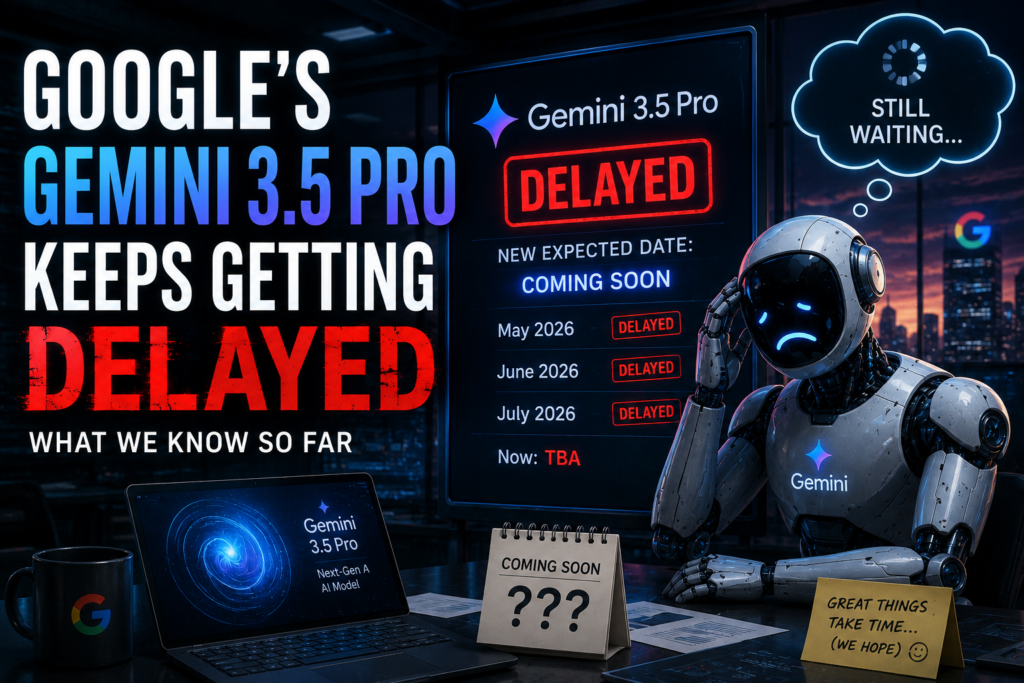
While OpenAI and Anthropic were dealing with government reviews, Google has had a quieter, more frustrating month.
Gemini 3.5 Pro has been stuck in limited preview through much of July, without a confirmed public release date, published benchmarks, or final pricing. Reports say the model has missed its expected launch window more than once, and Google is reportedly even exploring a smaller stopgap release, sometimes referred to as Gemini 3.6 Flash, to bridge the gap.
To be fair, delays like this aren’t rare in AI. Companies often push back release dates to fix performance issues or wait for stronger benchmark results before facing public scrutiny. Still, with competitors moving fast, the pressure on Google to ship something impressive is building.
Grok 4.5 Enters the Race {#grok}
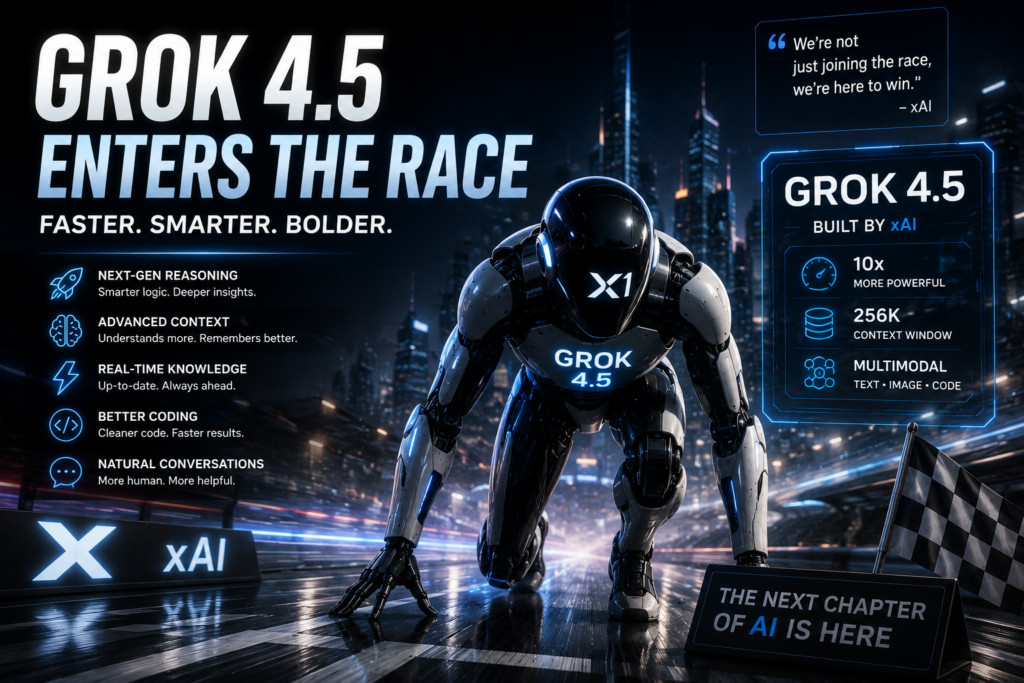
Elon Musk’s xAI has also been active this month. Grok 4.5 moved into private beta at SpaceX and Tesla in late June, giving it real-world testing inside Musk’s own companies before any wider rollout.
Reports suggest Grok 4.5 is being positioned as a lower-cost option compared to some rivals, though full public pricing and availability were still being finalized as of mid-July. If Grok 4.5 gets a full public release soon, it’ll add yet another serious contender to an already crowded field.
The Chip Boom Isn’t Slowing Down: TSMC’s Record Quarter {#tsmc}
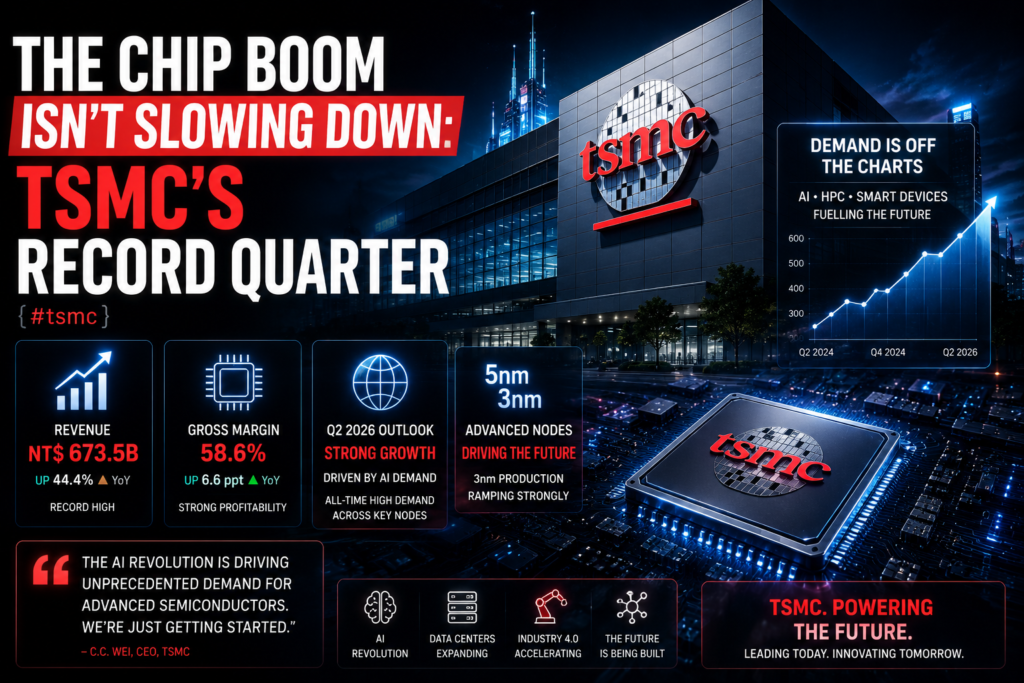
Here’s a story that doesn’t involve a chatbot at all, but matters just as much: the hardware behind AI.
Taiwan Semiconductor Manufacturing Company, better known as TSMC, reported its second-quarter 2026 earnings on July 16, and the numbers were staggering. Revenue hit roughly $40.2 billion, up 36% from the same quarter last year — a new all-time record. Net profit jumped about 77% year over year.
High-performance computing, the category that includes AI chips, made up around two-thirds of the company’s total revenue for the quarter. That’s a huge shift from just a few years ago, when smartphones were the main driver of TSMC’s business.
The company also raised its full-year capital spending plans and confirmed it’s putting an additional $100 billion into its Arizona manufacturing plants, on top of what it had already committed there.
Why should you care about a chip company’s earnings report? Because it’s one of the clearest signals available of how much real money is flowing into AI infrastructure. Every chatbot, every AI agent, every image generator runs on hardware TSMC helps build. When their numbers go up this much, it tells you the AI boom isn’t just marketing talk — it’s showing up in actual factories and actual dollars.
Feature Comparison: The Big Four Models {#comparison}
Here’s a simple side-by-side look at where things stood in mid-to-late July 2026. Keep in mind pricing and availability can shift fast.
| Model | Status (as of July 2026) | Known Strengths | Availability |
|---|---|---|---|
| GPT-5.6 (Sol/Terra/Luna) | Publicly launched July 9 | Coding, cybersecurity, efficiency | Widely available via ChatGPT and API |
| Anthropic Fable 5 / Mythos 5 | Restored access July 1 | Coding agent performance, safety tooling | Available to approved organizations |
| Gemini 3.5 Pro | Still in limited preview | Long-context tasks (unconfirmed benchmarks) | Vertex AI enterprise preview only |
| Grok 4.5 | Private beta | Integration with Tesla/SpaceX products | Not yet public |
A quick honesty note: because Gemini 3.5 Pro and Grok 4.5 haven’t had full public launches yet, we genuinely don’t have confirmed, independent benchmark numbers for them. Anyone claiming exact performance stats right now is likely guessing or relying on unverified leaks.
Pros and Cons of the Current AI Landscape {#proscons}
Pros:
- Models are getting more efficient, meaning better results without needing as much computing power
- Government safety reviews, while slower, add a layer of scrutiny before powerful tools reach the public
- Competition between OpenAI, Anthropic, Google, and xAI is pushing prices down and quality up
- Chip investment (like TSMC’s) suggests long-term infrastructure isn’t going anywhere
Cons:
- Release delays and government reviews make it harder for businesses to plan ahead
- Export control situations, like Anthropic’s June suspension, can disrupt access with little warning
- Benchmark claims from companies are hard to verify independently until public release
- The pace of change makes it genuinely tough for everyday users to know which tool is “best” at any given moment
Real-World Use Cases {#usecases}
Let’s ground this in practical terms. Here’s how these July 2026 developments actually touch real work:
- A small software team relying on GPT-5.6 Sol for code review might notice faster responses and fewer errors in security-related code, since that’s the exact area OpenAI has focused on.
- A researcher using Anthropic’s Claude models through Fable 5 access would have experienced a short outage window in mid-June, which is worth remembering if you’re building anything with a hard deadline — always have a backup plan when relying on a single AI provider.
- An enterprise IT department evaluating Gemini for a big contract might want to hold off on locking in decisions until Google confirms a real public release date and pricing.
- A hardware investor or supply chain manager watching TSMC’s numbers gets a decent early signal about how much AI infrastructure spending is likely to continue into 2027.
Pricing {#pricing}
Pricing across the AI industry in July 2026 is genuinely a moving target, and we want to be upfront about that rather than guess.
- GPT-5.6’s three tiers (Sol, Terra, Luna) are designed to give users a range of price points, with Luna positioned as the cheaper, faster option and Sol as the premium tier — but OpenAI had not published a single, finalized public pricing table for all three at the time of writing.
- Anthropic’s Fable 5 and Mythos 5 pricing is generally aligned with existing enterprise tiers for approved organizations, though full consumer pricing details weren’t confirmed in the reporting we reviewed.
- Gemini 3.5 Pro pricing remains unconfirmed since the model hasn’t left preview.
- Grok 4.5 pricing wasn’t finalized as of mid-July, since it’s still in private beta.
If pricing matters for your decision, it’s worth checking each company’s official pricing page directly before committing, since these numbers can change within days.
Who Should Pay Attention to This News? {#who}
- Developers and engineers should watch GPT-5.6’s coding benchmarks closely, since it’s the one model in this roundup with confirmed public availability and pricing right now.
- Business decision-makers evaluating a long-term AI vendor should factor in the export control episode with Anthropic as a reminder that geopolitical rules can affect access, not just technical performance.
- Everyday users who just want a reliable chatbot don’t need to chase every headline. GPT-5.6 is publicly available today, which makes it the most practical option to actually try right now.
- Investors and industry watchers should keep an eye on TSMC’s guidance, since it’s often a leading indicator for the entire AI hardware cycle.
My Honest Verdict {#verdict}
Here’s the thing about July 2026: it’s been a month of real progress, but also real friction.
GPT-5.6 is a genuinely solid release, and the fact that it went through extra government scrutiny before launch is arguably a good sign for safety, even if it frustrated some users waiting for access. Anthropic’s export control situation was resolved quickly, which speaks well of how the company handled a messy, fast-moving policy issue. But it’s also a clear signal that the days of AI companies operating purely as tech businesses are over — they’re now deeply tied to trade policy and national security decisions.
Google’s repeated delays with Gemini 3.5 Pro are a little concerning if you’re rooting for more competition in this space, though delays alone don’t mean the model will be bad — they might just mean Google wants to get it right before facing comparisons to GPT-5.6.
Overall, I’d call July 2026 a month where the technology kept improving, but the “rules of the road” around AI became just as big a story as the AI itself. That’s probably going to be the norm from here on out, not the exception.
7 FAQs {#faqs}
1. What is the biggest AI news story of July 2026?
The public launch of GPT-5.6 on July 9, following a period of government safety review, is arguably the biggest single story, alongside Anthropic’s export control situation with Fable 5 and Mythos 5.
2. Why was Anthropic’s Fable 5 model suspended in June 2026?
Anthropic suspended access to comply with U.S. Department of Commerce export controls, not because of a safety issue with the model itself. Access was restored on July 1, 2026, after the controls were lifted.
3. Is Gemini 3.5 Pro publicly available yet?
As of late July 2026, Gemini 3.5 Pro remains in limited enterprise preview through Vertex AI, without a confirmed general release date or public pricing.
4. Is Grok 4.5 available to the public?
Not yet, as of mid-July 2026. It was in private beta, initially tested internally at SpaceX and Tesla.
5. Why did the U.S. government review GPT-5.6 before release?
GPT-5.6 Sol showed strong cybersecurity capabilities during testing, which prompted a voluntary government safety review tied to a broader cybersecurity executive order before the model’s public rollout.
6. What does TSMC’s earnings report have to do with AI?
TSMC manufactures the advanced chips that power most major AI systems. Its record-breaking Q2 2026 earnings, driven largely by high-performance computing demand, is a strong real-world signal of continued AI infrastructure investment.
7. Which AI model should I actually use right now?
If you want something fully available today with confirmed pricing and public benchmarks, GPT-5.6 is currently the most accessible option. Other models like Gemini 3.5 Pro and Grok 4.5 are still not broadly available.
Conclusion {#conclusion}
AI news in July 2026 tells a bigger story than any single headline. Yes, GPT-5.6 launched. Yes, Anthropic went through a rocky export control episode. Yes, Google is still working out the kinks with Gemini. But zoom out, and you’ll see an industry that’s maturing in real time — one where government policy, chip manufacturing, and model releases are all tangled together now.
If you take one thing away from this month, let it be this: the “best” AI model isn’t a fixed answer anymore. It depends on what’s actually available to you today, not what’s promised for tomorrow. Keep that in mind, and you’ll make smarter decisions no matter how fast this space keeps moving.
New update on 2 August 2026 .
Read Also
Perplexity AI July 2026 Update: Everything You Need to Know
Midjourney AI Review 2026: Is It Still the Best AI Image Generator? (Honest Breakdown)
Microsoft Copilot Review 2026: Is It Actually Worth Paying For?

Hey, I’m Manish
I’ve tested 100+ AI tools since 2023 and reviewed them honestly on ZentroAI.
My mission: Help you discover the best AI tools without the hype.
Whether you need ChatGPT alternatives, coding assistants, or image generators .
you’ll find detailed, hands-on reviews here.