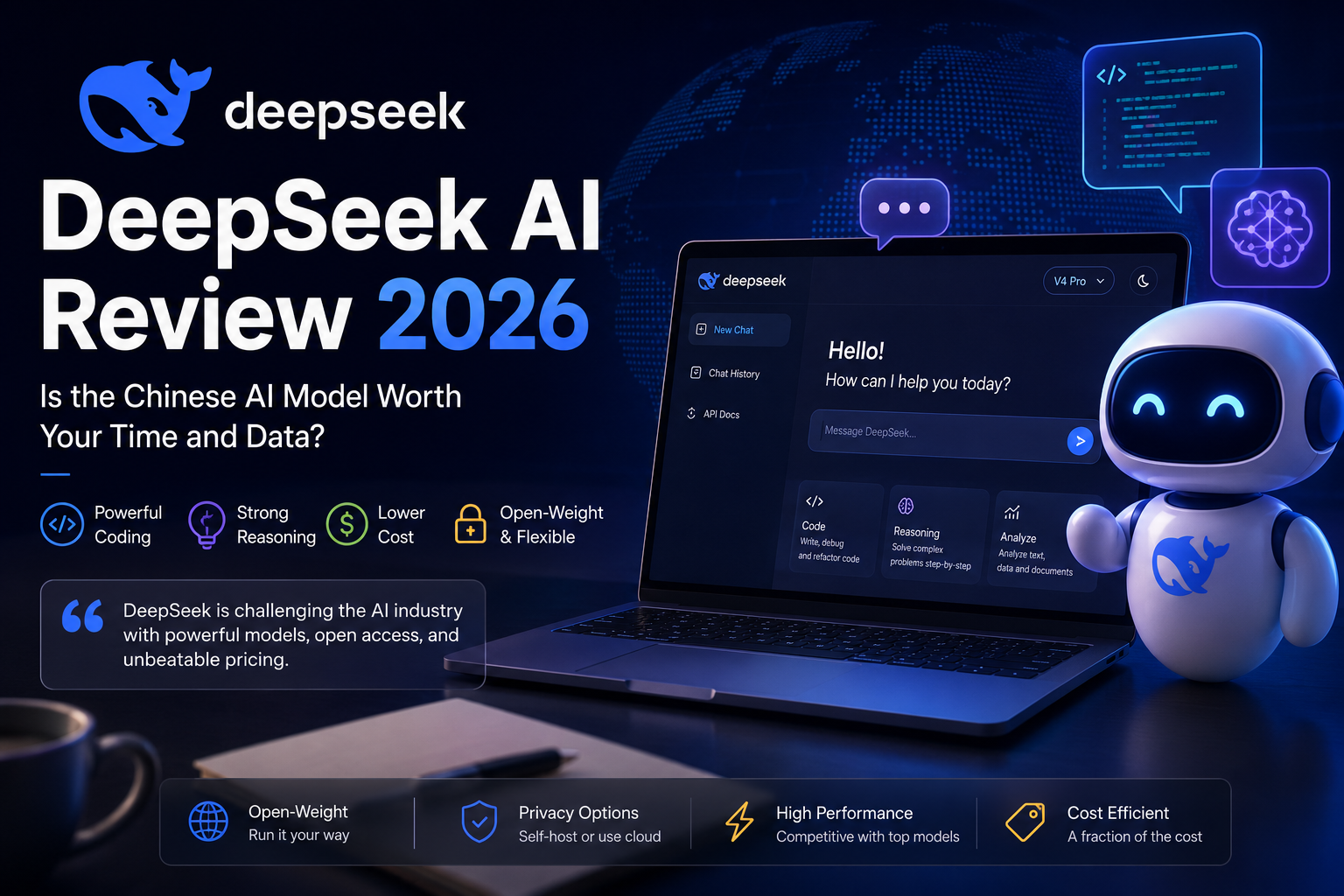
DeepSeek AI Review 2026
If you’ve spent any time in tech news over the past year and a half, you’ve probably heard the name DeepSeek mentioned in the same breath as ChatGPT, Claude, and Gemini. What started as a relatively obscure research lab out of Hangzhou, China, turned into one of the most talked-about stories in the entire AI industry — and it did it almost overnight, back in January 2025, when its R1 model reportedly matched top-tier reasoning performance while allegedly being trained for a fraction of the cost of its American rivals.
Fast forward to today, and DeepSeek has released several new models, the most significant being the V4 family, which arrived in two flavors — V4 Flash and V4 Pro. So the question a lot of everyday users, developers, and small business owners are asking right now is simple: is DeepSeek actually any good, or is it just a cheaper knockoff riding on hype?
I spent time digging through DeepSeek’s current offerings, pricing, real-world use cases, and the ongoing privacy conversation surrounding it, and this review lays it all out honestly — the good, the not-so-good, and everything in between.
What Exactly Is DeepSeek?
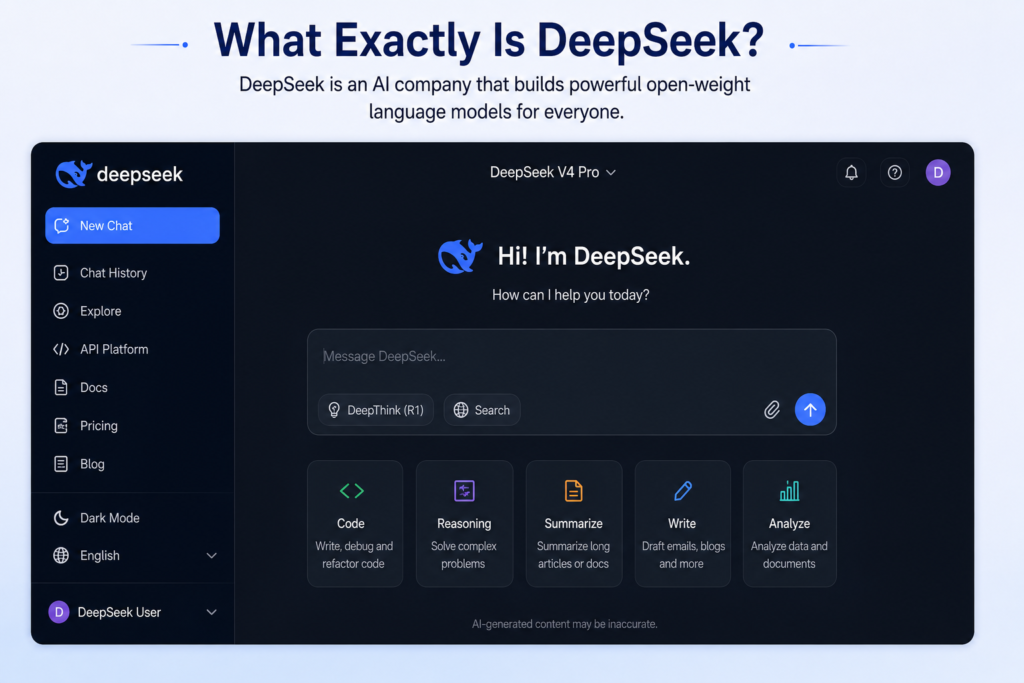
DeepSeek is an AI company that builds large language models (LLMs) — the same category of technology that powers ChatGPT, Claude, and Gemini. What makes DeepSeek stand out from most of its competitors is that it releases many of its models as “open weight,” meaning developers and researchers around the world can download the model files, run them on their own servers, and even modify them for their own purposes.
You can access DeepSeek in three main ways:
- The free web chat at DeepSeek’s official website, which works a lot like ChatGPT’s browser interface.
- A free mobile app, available on both iOS and Android, that mirrors the web experience.
- A paid API, aimed at developers who want to build DeepSeek’s models into their own apps, tools, or workflows.
For the average person just looking for a chatbot to help write emails, summarize articles, or explain a tricky concept, DeepSeek functions almost identically to the free tier of ChatGPT — except, notably, without a subscription paywall blocking off its more advanced features.
A Quick Recap: Why Did DeepSeek Blow Up in the First Place?
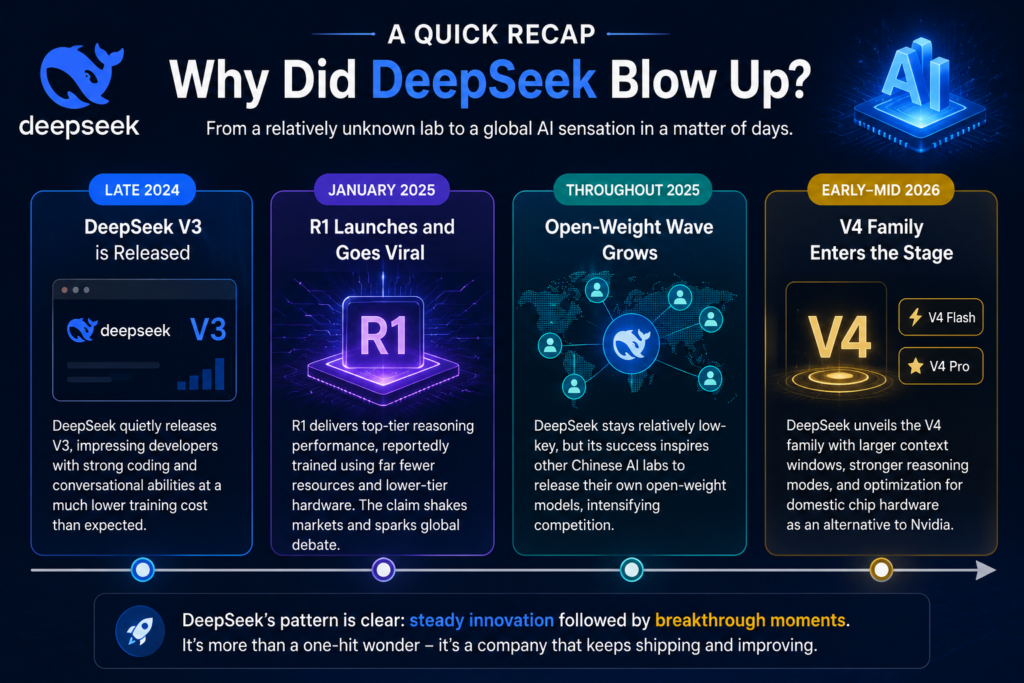
Back in early 2025, DeepSeek released a reasoning-focused model called R1. What caught everyone’s attention wasn’t just that it performed competitively against OpenAI’s most advanced reasoning model at the time — it was the claim that DeepSeek trained it using considerably fewer resources and lower-tier hardware than what American labs were reportedly using. That claim rattled markets and sparked serious debate about how much computing power is actually required to build a frontier-level AI model.
Whether or not every detail of that story holds up to scrutiny, the effect was real: it pushed a wave of other Chinese AI labs to release their own open-weight models, and it forced the entire industry to rethink assumptions about training costs and efficiency.
A Brief Timeline: How DeepSeek Got Here
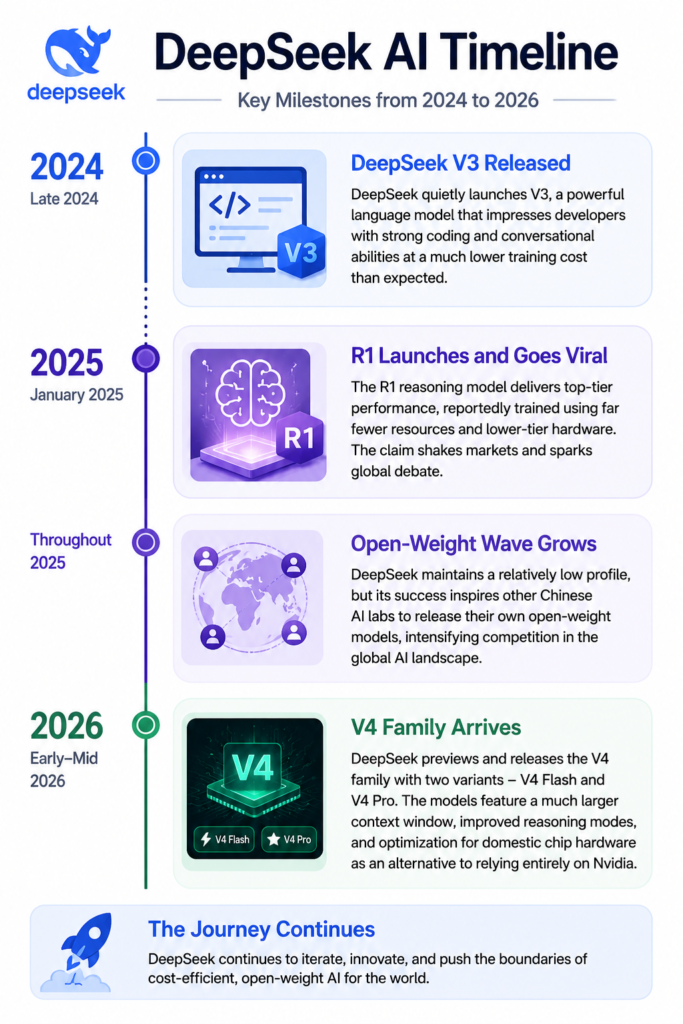
It helps to understand the path DeepSeek took to reach this point, because it explains a lot about why the company keeps making headlines.
- Late 2024: DeepSeek releases V3, a model that quietly impresses the developer community with strong coding and conversational ability at a much lower training cost than expected.
- January 2025: R1 launches and becomes a global story almost overnight, thanks to its reasoning capability and the claim that it was trained for a fraction of the budget used by major American labs.
- Throughout 2025: DeepSeek keeps a relatively low profile publicly, but other Chinese AI labs follow its lead, releasing their own open-weight models and intensifying competition in that space.
- Early-to-mid 2026: DeepSeek previews the V4 family, split into V4 Flash and V4 Pro, with a much larger context window and improved reasoning modes, along with optimization for domestic chip hardware as an alternative to relying entirely on Nvidia.
This pattern — steady iteration followed by a headline-grabbing leap — is worth keeping in mind. It suggests DeepSeek isn’t a one-hit wonder; it’s a lab that’s consistently shipping and improving, even if the spotlight doesn’t always follow every release.
How I Approached This Review
Rather than just repeating marketing claims, this review focuses on three things: what DeepSeek’s models are actually built to do, how they tend to perform in day-to-day, practical situations described by developers and everyday users, and what trade-offs come with choosing DeepSeek over a more established, closed-source alternative. Pricing figures and technical specs referenced here reflect DeepSeek’s publicly listed information as of mid-2026, and like any fast-moving AI product, some of these details may shift by the time you’re reading this — it’s always worth double-checking current numbers directly on DeepSeek’s own site before making a purchasing decision.
The Current Lineup: What Models Does DeepSeek Offer in 2026?
As of mid-2026, DeepSeek’s most relevant models are:
- DeepSeek V4 Pro — the larger, more capable flagship model, built with coding, complex reasoning, and multi-step agent tasks in mind.
- DeepSeek V4 Flash — a smaller, faster, and cheaper version of the same generation, designed for high-volume or budget-conscious use cases.
- DeepSeek R1 — the reasoning-focused model that started it all, still widely used for math-heavy or logic-heavy problems.
- DeepSeek V3.2 — the previous flagship generation, still in active use by many developers who haven’t migrated yet.
Both V4 models use what’s called a mixture-of-experts (MoE) architecture. In plain English, this means the model doesn’t activate its entire massive parameter count for every single response. Instead, it selectively “wakes up” only the specific parts of itself that are relevant to your particular question or task. This is a big part of why DeepSeek can offer such aggressive pricing — it’s not burning the same amount of computing power on every single request that a fully “dense” model would.
One of the more genuinely useful upgrades in the V4 generation is a significantly expanded context window, reportedly up to around 1 million tokens. In practical terms, that means you could feed an entire codebase, a lengthy legal contract, or a stack of research papers into the model in one go, and it can reference all of that information without losing track partway through. For developers working with large repositories or writers working with long manuscripts, that’s a meaningful quality-of-life improvement over older models that would force you to break content into smaller chunks.
How Does DeepSeek Perform in Practice?
Benchmarks are one thing, but real-world usage tells a different story. Here’s how DeepSeek tends to hold up across common use cases:
Coding and Debugging
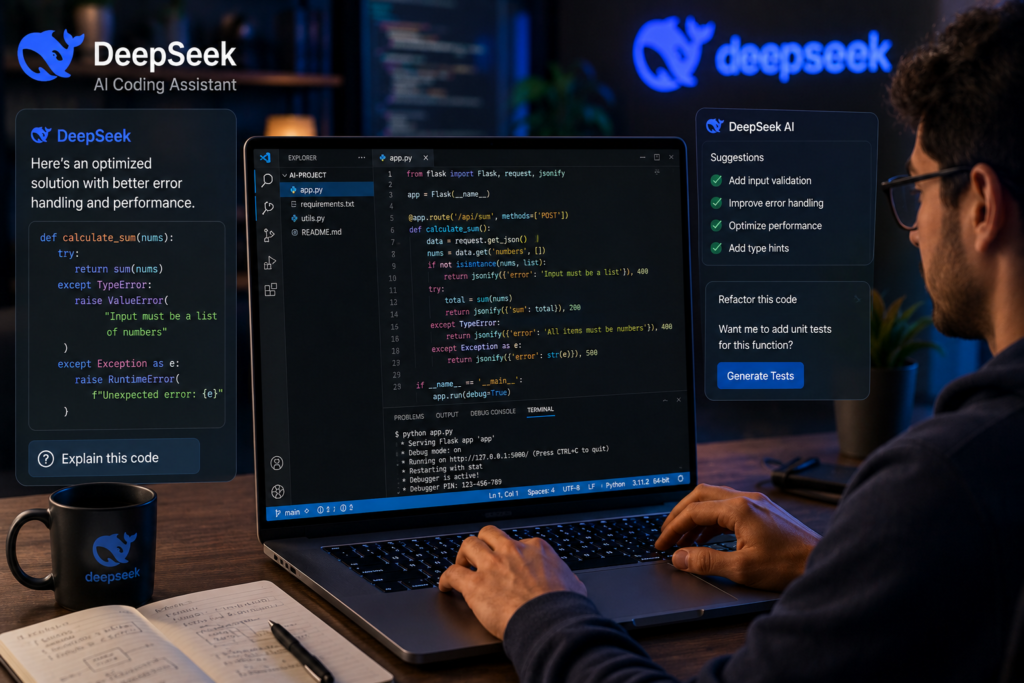
This is arguably where DeepSeek shines the brightest. Independent testing and developer feedback consistently point to DeepSeek’s models — particularly V4 Pro — performing strongly on coding competition-style benchmarks, landing in a range comparable to some of the more expensive frontier models from OpenAI. For everyday developer tasks like debugging across multiple files, refactoring messy code, or generating boilerplate, it holds up well, especially given how much cheaper it is per API call.
Math and Logical Reasoning
DeepSeek’s R1 model, and by extension its newer reasoning modes in the V4 family, are genuinely strong at step-by-step mathematical reasoning. If you show it your work, it will actually walk through its logic in a visible, step-by-step way, which is useful if you want to sanity-check how it arrived at an answer instead of just trusting a black-box output.
General Writing and Conversation
Here’s where things are a little more mixed. DeepSeek can absolutely write emails, blog outlines, and everyday content competently. However, a common complaint among regular users is that its responses can run longer and more verbose than necessary, sometimes padding out an answer when a shorter one would have done the job. It’s not a dealbreaker, but if you value concise answers, you may find yourself editing down its output more than you would with some competitors.
Multimodal Tasks (Images, Audio, Video)
This is a real limitation worth flagging clearly: DeepSeek’s V4 models are currently text-only. If your workflow depends on generating images, transcribing audio, or analyzing video content directly within the same tool, DeepSeek isn’t going to cover that need on its own, and you’ll likely need to pair it with a separate tool.
DeepSeek Pricing: The Real Selling Point
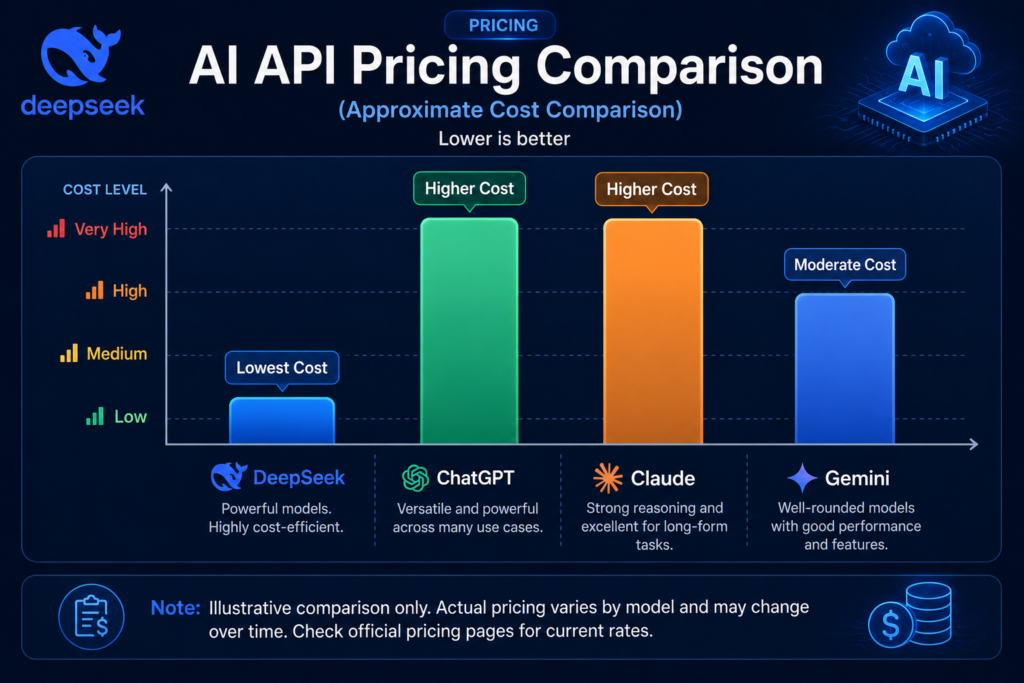
Let’s talk about the number one reason people keep bringing DeepSeek up in conversation: cost.
Compared to many closed-source frontier models from major American labs, DeepSeek’s API pricing is dramatically lower — in some comparisons, on the order of a small fraction of the cost per million tokens processed. For a solo developer, a small startup, or a hobbyist running a side project, that difference can be the deciding factor between a tool being financially viable or not.
That said, it’s worth being realistic about what “cheap” actually buys you. Lower pricing generally lines up with DeepSeek trailing top frontier models by a modest but real margin on certain knowledge-heavy benchmarks. In other words, you’re not getting an identical product for less money — you’re getting a genuinely capable product that’s slightly behind the absolute best available, for meaningfully less money. For most everyday use cases, that trade-off is a good one. For mission-critical enterprise applications where every percentage point of accuracy matters, it’s worth testing thoroughly before committing.
The Privacy Question Nobody Should Skip
This is the part of any honest DeepSeek review that deserves real attention rather than a quick mention at the bottom.
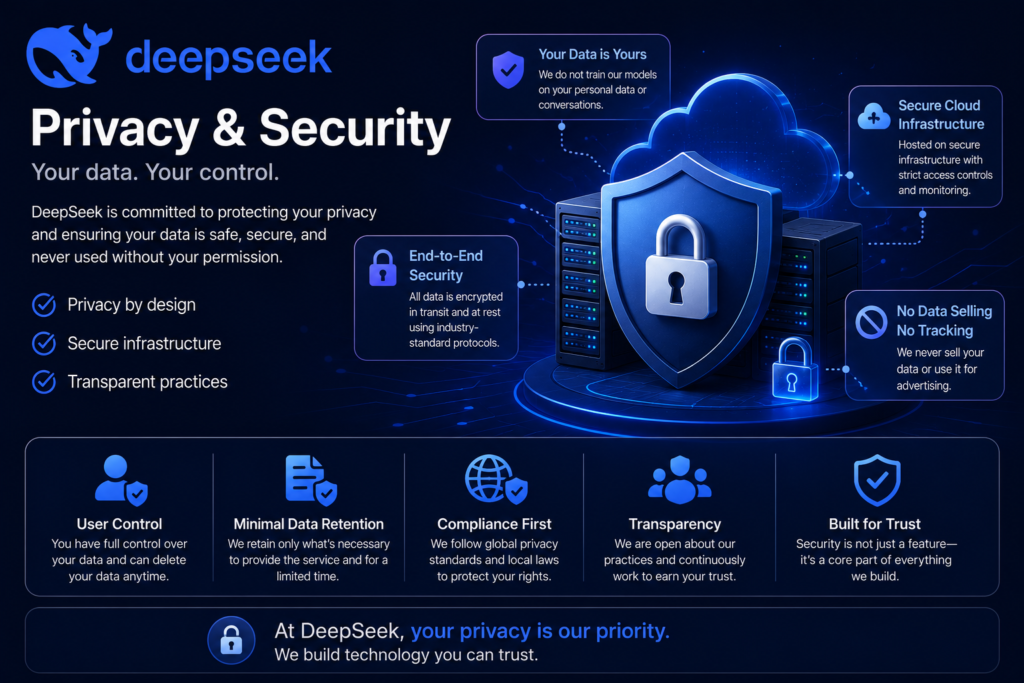
Because DeepSeek is a Chinese company, using its free web chat or mobile app means your conversations, and potentially other data associated with your account, may be stored on servers subject to Chinese data regulations. For casual use — asking it to help draft a grocery list or explain a homework problem — this is unlikely to matter much to most people. But if you’re a business handling sensitive client data, a journalist working on confidential sourcing, or anyone with a legitimate reason to be cautious about where their information ends up, this is a genuinely important consideration, not just a talking point.
The good news is that because DeepSeek releases many of its models as open weights, you have an alternative: you can self-host the model on your own infrastructure, or run it through a Western cloud provider that offers it as a managed service. Doing this keeps your data under your own control, though it doesn’t necessarily change how the model itself was trained or whether it still applies certain content restrictions on politically sensitive topics — a limitation that’s been well documented and is worth knowing about upfront.
If data sovereignty matters to you, the practical takeaway is this: use the self-hosted or third-party-hosted route rather than DeepSeek’s own consumer app if you’re working with anything sensitive.
Getting Started With DeepSeek: A Few Practical Tips
If you’re curious to try it out yourself, here’s a simple path to follow:
- Start with the free web chat. There’s no reason to commit to the API before testing whether the model’s style and accuracy actually fit your needs. Ask it the kinds of questions you’d normally ask any AI assistant and compare the answers to what you’re used to.
- Try the reasoning mode for anything math- or logic-heavy. If you’re working through a multi-step problem, toggling on the reasoning mode (when available) will show you its thought process, which makes it much easier to catch mistakes before you rely on the final answer.
- Test the API on a small scale before scaling up. If you’re a developer evaluating DeepSeek for a production workload, run a limited batch of real requests first and compare cost, latency, and accuracy against whatever tool you’re currently using.
- Decide early whether self-hosting makes sense for you. If your use case involves any sensitive data, it’s worth setting up a self-hosted or third-party-hosted deployment from day one rather than starting on the consumer app and migrating later.
- Keep an eye on release notes. DeepSeek has shown a pattern of shipping updates fairly quickly, so a limitation you run into today may already be addressed in the next update.
A Note for Small Business Owners and Content Creators
A lot of the conversation around DeepSeek understandably centers on developers, but plenty of small business owners, bloggers, freelancers, and marketers are also weighing whether to add it to their toolkit. If your main use case is drafting content, summarizing customer feedback, brainstorming product descriptions, or getting quick explanations of unfamiliar topics, DeepSeek’s free chat tier can realistically replace a good chunk of what you might otherwise pay for elsewhere.
The caveat, as covered above, is data handling. If you’re pasting in anything involving customer information, financial details, or proprietary business strategy, it’s worth pausing and asking whether that content belongs in a free consumer chatbot at all — regardless of which company built it. A reasonable middle ground many small teams land on is using DeepSeek freely for general research, writing, and brainstorming, while keeping genuinely sensitive material restricted to tools with clearer enterprise-grade data agreements in place.
The Bigger Picture: Why DeepSeek Matters Beyond the Hype
It’s easy to treat DeepSeek as just another entry in a crowded AI chatbot market, but its impact has been broader than that. Its early success forced a public reckoning with assumptions about how much compute and capital are actually required to build a competitive AI model, and it accelerated a wave of open-weight releases from other labs that might not have felt the same urgency otherwise. For everyday users, that competitive pressure has translated into real benefits: lower prices across the board, faster iteration cycles, and more genuine choice for anyone deciding which AI tool fits their workflow and budget.
That broader shift is arguably DeepSeek’s most lasting contribution, regardless of how any single model release stacks up against its rivals a year from now.
Where DeepSeek Falls Short
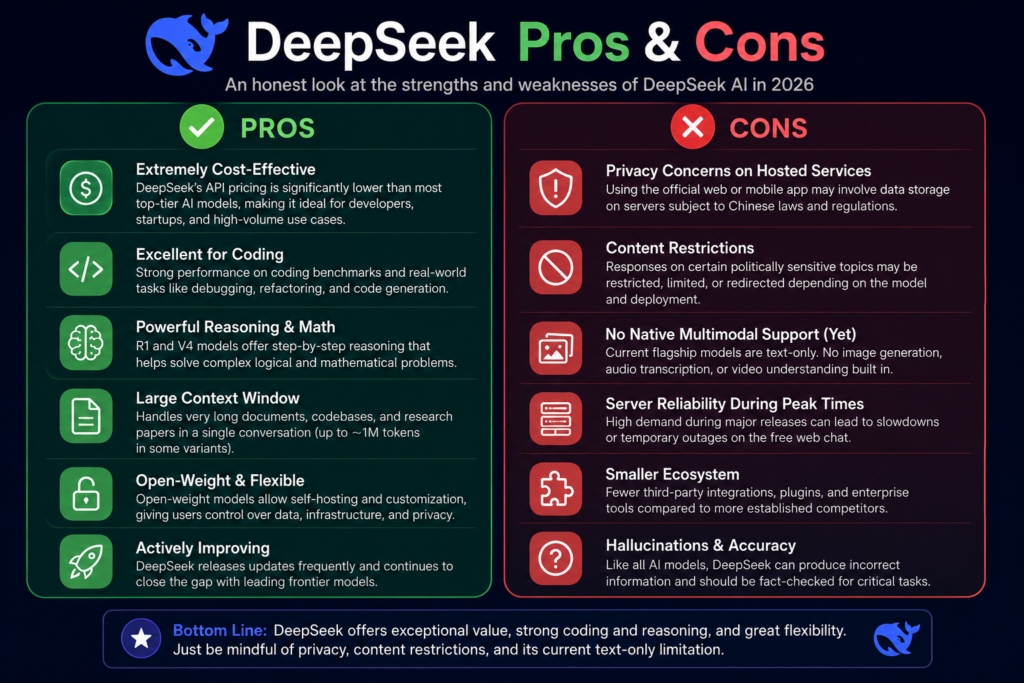
No AI tool is perfect, and it’s worth being upfront about DeepSeek’s weaker points:
- Server reliability during peak hours. Because of its massive popularity, especially right after major releases, DeepSeek’s free chat interface has occasionally struggled with slowdowns and outages when demand spikes.
- Content restrictions on politically sensitive topics. Ask it about certain subjects tied to Chinese politics or history, and you’ll likely get a deflected or heavily filtered answer, regardless of which server you’re routing through.
- Verbose responses. As mentioned earlier, its answers can run longer than necessary for simple questions.
- No native multimodal support in the current flagship models. No image generation, no audio transcription, no video understanding built in.
- Smaller ecosystem. Compared to more established players, DeepSeek’s third-party plugin support, browser extensions, and enterprise integrations are still catching up.
Who Should Actually Use DeepSeek?
Based on everything above, here’s how I’d break it down:
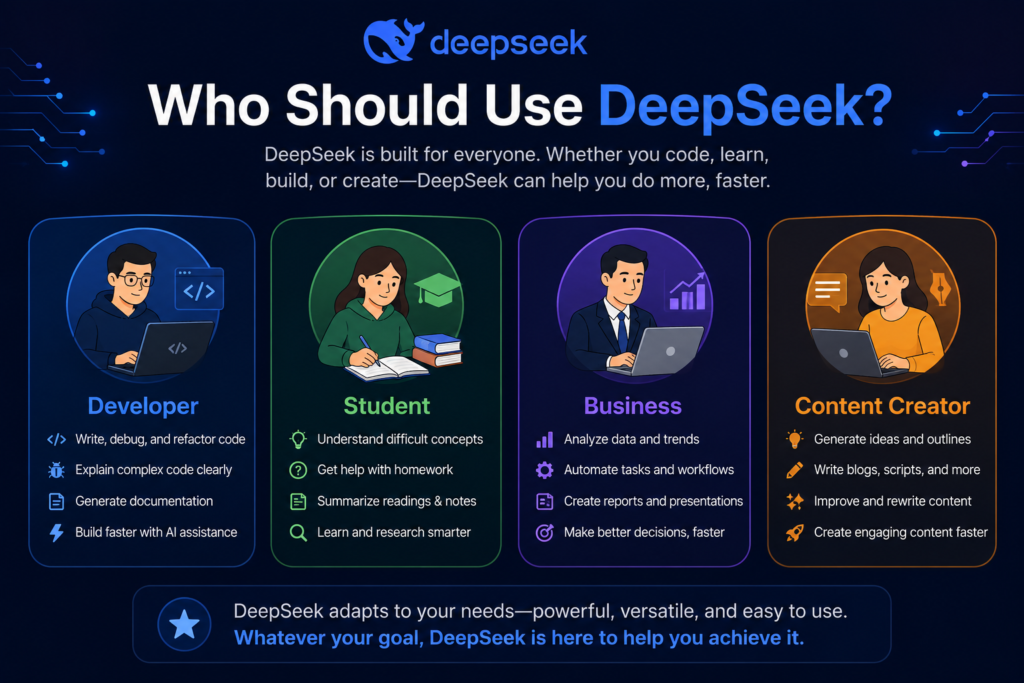
DeepSeek is a strong fit if you are:
- A developer or small team that’s cost-sensitive and doing high-volume API calls, especially for coding tasks.
- A hobbyist or student who wants a capable free chatbot without hitting a paywall for basic reasoning features.
- A business willing to self-host for data control while still benefiting from a genuinely competitive model.
- Someone working with very long documents or codebases who needs a large context window without paying premium prices for it.
DeepSeek is probably not the right fit if you are:
- Handling sensitive or regulated data and unwilling to self-host.
- Someone who needs built-in image, audio, or video generation in the same tool.
- A business that requires guaranteed uptime SLAs and dedicated enterprise support out of the box.
- Working on anything where discussing Chinese political topics is relevant to your task.
DeepSeek vs. ChatGPT vs. Claude: A Quick, Honest Comparison
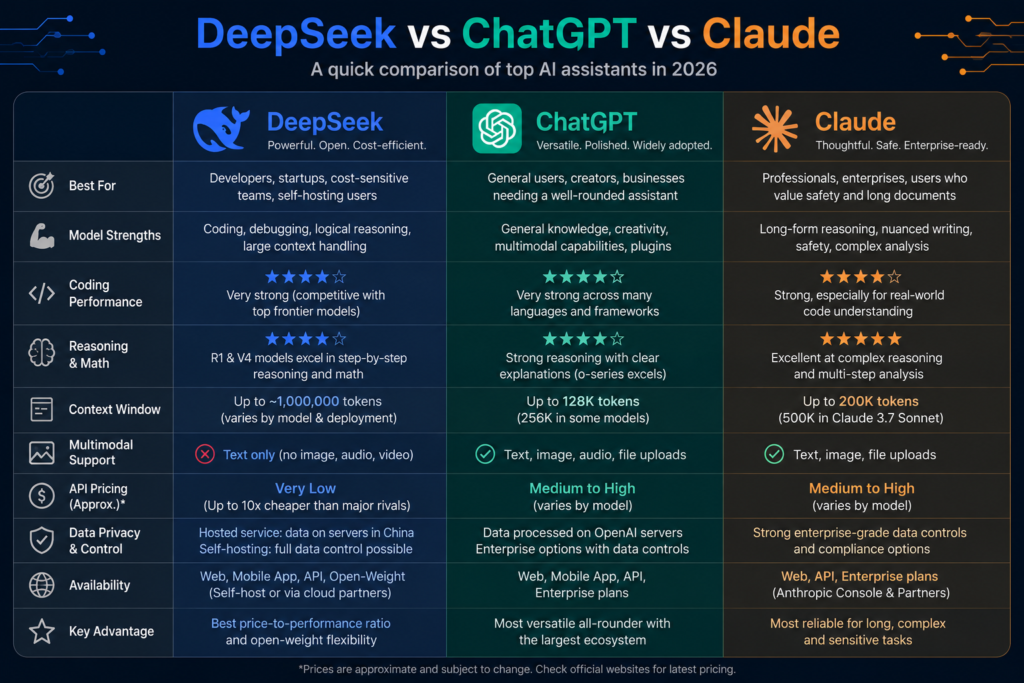
It’s tempting to declare a single “winner,” but the honest answer is that it depends entirely on what you’re optimizing for.
If your priority is raw cost efficiency and you’re comfortable with a text-only tool, DeepSeek is very hard to beat right now. If you need a well-rounded assistant with strong multimodal support, tighter enterprise integrations, and a longer track record of reliability, tools like ChatGPT or Claude still have an edge in those specific areas. And if your top priority is careful, nuanced reasoning with strong safety guardrails for sensitive professional use, Claude tends to be the more conservative, dependable choice.
None of these tools are strictly “better” across every category. They’re built with different trade-offs in mind, and the right pick genuinely depends on your budget, your privacy requirements, and what kind of tasks you’re throwing at them day to day.
Final Verdict: Is DeepSeek Worth Using in 2026?
DeepSeek has earned its reputation. It’s not just a cheap alternative riding on a viral news cycle — it’s a genuinely capable, actively improving family of models that punches well above its price point, especially for coding and logical reasoning tasks. The V4 release pushed it even closer to matching some of the most expensive frontier models on the market, and the open-weight approach gives privacy-conscious users a real path to using the technology on their own terms.
That said, it’s not a tool to adopt blindly. If you’re a casual user just looking for a smart, free chatbot, DeepSeek is absolutely worth trying — you likely won’t notice much of a gap compared to paid alternatives for everyday tasks. If you’re a business or developer, the calculation is a little more involved: weigh the very real cost savings against the privacy trade-offs of the hosted version, and consider self-hosting if data sensitivity is a concern.
At the end of the day, DeepSeek represents something bigger than just one company’s product line — it’s proof that frontier-level AI capability doesn’t have to come with a frontier-level price tag. Whether that’s exciting or concerning probably depends on which side of the AI industry you’re standing on, but for everyday users and budget-conscious developers, it’s hard to argue against giving it a try.
Frequently Asked Questions
Is DeepSeek free to use? Yes, the web chat and mobile app are free. The API is paid, but priced significantly lower than most major competitors.
Is DeepSeek safe to use for sensitive information? If you’re using the free consumer app, it’s best to avoid sharing sensitive or confidential information, since your data may be processed on servers subject to Chinese data regulations. Self-hosting the open-weight models is a safer route for sensitive use cases.
Does DeepSeek support image or video generation? Not currently. The flagship V4 models are text-only, so you’ll need a separate tool for image, audio, or video generation.
How does DeepSeek compare in price to ChatGPT? DeepSeek’s API pricing is substantially lower than most comparable models from OpenAI, Anthropic, and Google, often by a wide margin, making it especially attractive for high-volume or budget-conscious developers.
Can I run DeepSeek without sending data to China? Yes. Because DeepSeek releases open-weight models, you can self-host them on your own servers or use a third-party cloud provider, keeping your data outside of DeepSeek’s own infrastructure.
Is DeepSeek good for coding? Yes, this is one of its strongest areas. Independent testing consistently shows it performing competitively on coding benchmarks, especially considering its lower price point.
Read Also……

Hey, I’m Manish
I’ve tested 100+ AI tools since 2023 and reviewed them honestly on ZentroAI.
My mission: Help you discover the best AI tools without the hype.
Whether you need ChatGPT alternatives, coding assistants, or image generators .
you’ll find detailed, hands-on reviews here.